
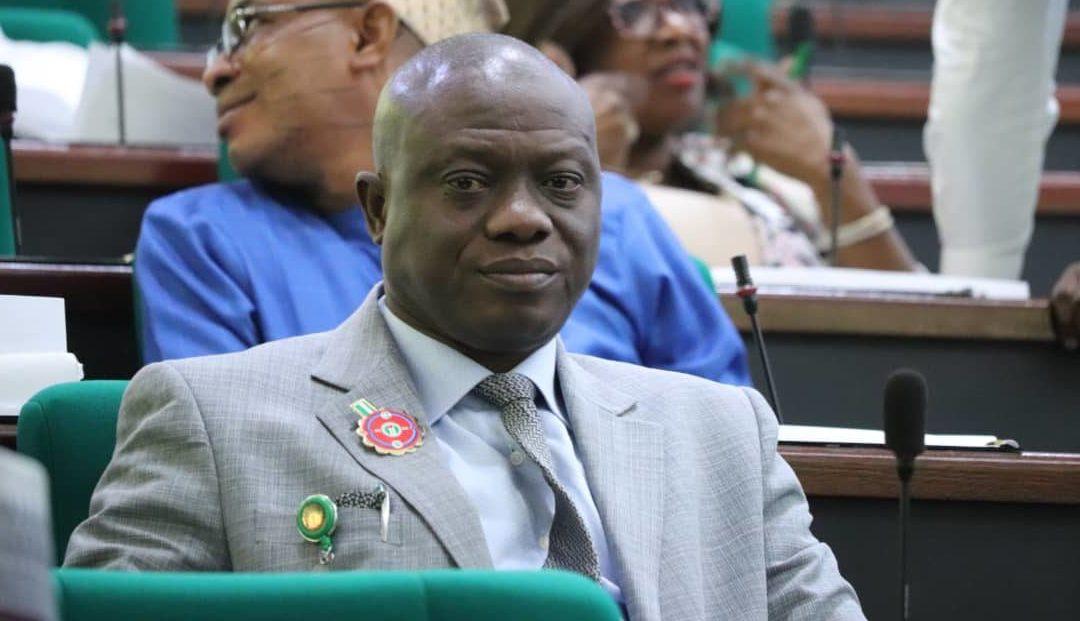
On December 3, 2024, Representative Bamidele Salam marked International Day of Persons with Disabilities (IDPD) by passionately advocating for equality and inclusion for persons with disabilities in Nigeria. Calling for concrete steps to break down societal barriers, he emphasized the importance of ensuring equal rights and opportunities for all, regardless of their physical or mental abilities.
Salam, who represents the Ede North, Ede South, Egbedore, and Ejigbo Federal Constituency of Osun State in the National Assembly, issued a statement through his media aide, Joshua Afolabi, urging the government, institutions, and individuals to collaborate in creating an accessible and equitable society for people with disabilities. World Disability Day, observed globally to raise awareness about the challenges faced by people with disabilities, also aims to promote their rights and inclusion in every facet of life. This year, Representative Salam took the opportunity to reiterate his commitment to advocating for the rights of individuals with disabilities, particularly in governance and public policies.
“We gather today not just to celebrate the potential of people with disabilities, but to recognize the urgent need for action,” Salam said in his statement. “We must strive to build an inclusive society where all individuals, irrespective of their physical, mental, or sensory limitations, are given equal opportunities to thrive.” He continued, “True democracy cannot exist without the equal participation of all citizens. Our brothers and sisters with disabilities must not only have their voices heard but be actively involved in shaping the laws and policies that affect their lives.”
Salam’s call to action comes as Nigeria continues to grapple with challenges in fully implementing disability-inclusive policies. Despite legislative strides, people with disabilities still face significant barriers to voting, participating in political processes, and holding public office. Representative Salam stressed the need for reforms that would make political participation more accessible to individuals with disabilities. He advocated for accessible voting facilities, financial support for disabled candidates, and greater engagement with the disability community by political parties. Moreover, Salam called on political parties to ensure that persons with disabilities are included in their platforms, decision-making processes, and leadership structures. This, he stated, is crucial for prioritizing disability rights in governance at all levels.
While focusing on political inclusion, Salam also highlighted that equality for persons with disabilities must extend across other sectors, including education, healthcare, employment, and public services. He acknowledged that while there have been positive changes in some areas, systemic discrimination and social exclusion remain persistent issues for people with disabilities in Nigeria. “The right to education, healthcare, and employment should never be determined by someone’s physical abilities,” Salam asserted. “Persons with disabilities have the same rights as anyone else to live a full and meaningful life. It is imperative that we push for the full implementation of the Disability Rights Act and ensure that all institutions—whether public or private—are accessible to everyone.”
In closing, Salam expressed his vision for a society where disability is not seen as a hindrance, but as a valuable aspect of diversity that enriches the community. He reaffirmed his dedication to working towards a future where all Nigerians, regardless of their abilities, have equal access to opportunities and are treated with dignity and respect. “We must go beyond sympathy,” Salam said. “Now is the time for meaningful action. This is not just a call for the disabled community; it is a call for the kind of inclusive society we all want to build.”